.jpg)
How One Classic Car’s Gas Smell Led to the Creation of Vapor Trapper

Every great automotive product starts with a problem.
For Vapor Trapper, that problem was the unmistakable smell of raw gasoline coming from a beautifully built 1962 Low Drag Coupe.

The car looked incredible, but after it was parked, fuel vapors escaping through the vent system would slowly fill the garage with an unwanted gas odor. It was the kind of issue many classic car owners accept as normal, but it should not be.
That single customer pain point became the beginning of Vapor Trapper.
A Common Classic Car Problem Without a Premium Solution
Classic cars, hot rods, and custom builds often use vented fuel systems. As fuel expands and evaporates inside the tank, those vapors need somewhere to go.
Without an effective vapor control system, the vapors escape directly into the surrounding air.
That is why many owners walk into their garage and immediately smell gasoline, especially after driving, refueling, or parking the vehicle in an enclosed space.
At the time, the available charcoal vapor canisters were typically bulky plastic components designed for factory applications. They may have worked mechanically, but they were not built for a high-end custom vehicle like the Low Drag Coupe.
The owner needed something that would solve the gas smell without compromising the appearance, craftsmanship, or function of the build.
The Idea Behind Vapor Trapper
The goal was straightforward: create a charcoal vapor canister that worked properly, looked clean, and belonged on a premium classic car.
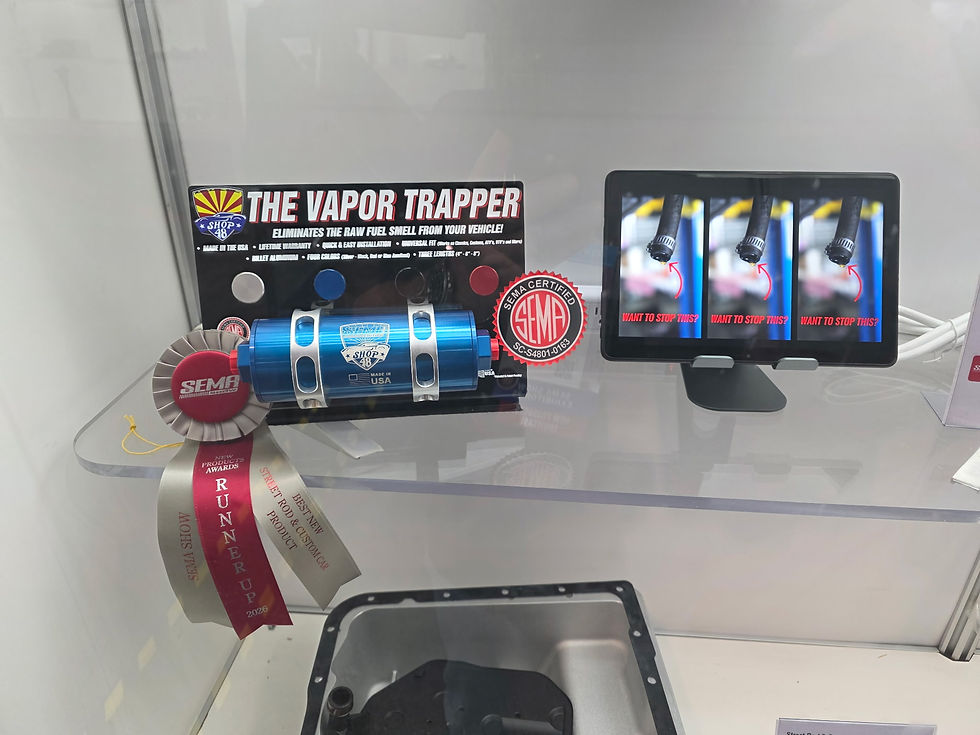
The result was Vapor Trapper, a billet aluminum charcoal vapor canister designed specifically for classic vehicles, hot rods, restorations, and custom builds.

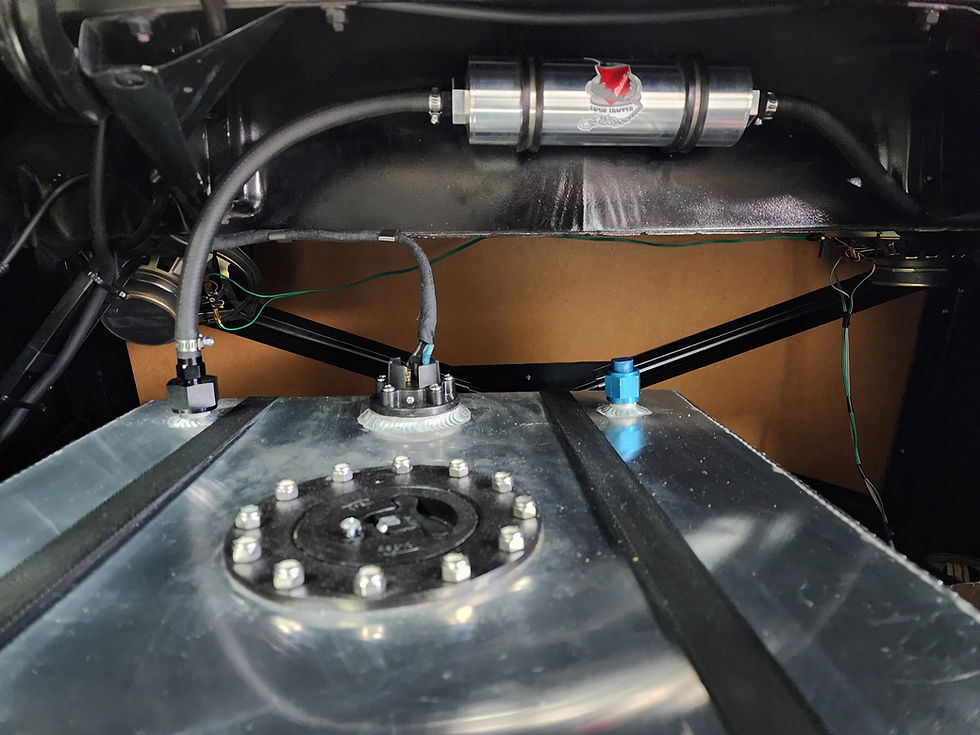
Installed inline with the fuel tank vent line, Vapor Trapper captures fuel vapors before they escape into the garage while still allowing the fuel tank to breathe properly.
Instead of trying to hide a cheap plastic canister somewhere underneath the car, builders could now install a vapor control solution made from premium materials and
designed to complement the rest of the vehicle.
The First Real-World Test
The original Vapor Trapper was installed on the 1962 Alloy Jaguar.
The raw fuel smell disappeared.
More importantly, the solution continued working for years, proving that the concept was not simply an attractive accessory. It was a functional answer to a real problem experienced by classic car owners across the country.
That first installation became the foundation for everything Vapor Trapper is today.
What started as a solution for one vehicle quickly revealed a much larger need throughout the automotive industry.
Why Classic Car Owners Still Deal With Gas Smell
Many owners assume that a gasoline odor is simply part of owning an older vehicle.
It is not.
A properly maintained classic car should not constantly fill a garage, trailer, showroom, or storage space with raw fuel vapors.
The odor may come from the fuel tank vent system, especially when the vehicle does not have an effective charcoal vapor canister installed. Heat, fuel expansion, aggressive driving, and a recently filled tank can all increase the amount of vapor moving through the vent line.
Ignoring the issue does not make it disappear. It simply allows the smell to continue spreading throughout the space where the vehicle is stored.
For owners who have invested significant time and money into their builds, settling for a garage that smells like gasoline does not make sense.
Built for Cars That Deserve Better
Vapor Trapper was created because premium vehicles deserve a premium solution.
Each canister is constructed from billet aluminum, made in the USA, and designed to be rechargeable rather than disposable. The internal activated charcoal media captures fuel vapors while allowing the tank to maintain proper ventilation.
Vapor Trapper canisters are available in multiple sizes and configurations to accommodate different vehicles, vent line sizes, available mounting locations, and performance requirements.
Whether the vehicle is a restored muscle car, a custom hot rod, a classic Porsche, a vintage truck, or a high-end show car, the goal remains the same: eliminate the unwanted gas smell without taking away from the build.
From One Jaguar to Builds Across the Country
The 1962 Alloy Jaguar may have been the first, but it was not the last vehicle struggling with escaping fuel vapors.
Today, Vapor Trapper is trusted by builders, restoration shops, dealerships, and classic car owners across the country.
The product has been installed on everything from Mustangs and Corvettes to C10s,
Porsches, custom trucks, race-inspired builds, and one-of-a-kind show vehicles.
Each installation traces back to the same original problem: a great car should not leave the entire garage smelling like gasoline.
The Problem Will Still Be There Tomorrow
It is easy to put off addressing a fuel odor, especially when the vehicle continues to run normally.
But every time the car is parked, the same vapors may continue escaping into the garage.
The smell can settle into the space, surrounding equipment, storage items, and even the home when the garage is attached.
Owners often spend thousands of dollars improving the engine bay, paint, interior, suspension, and performance while ignoring the vent system responsible for that lingering odor.
Vapor Trapper offers a clean, proven solution before another driving season, storage period, or car show weekend passes with the same problem unresolved.
Solve the Problem That Started It All
Vapor Trapper began with one classic car, one frustrated customer, and one gas smell that needed to be eliminated.
The solution developed for that 1962 Alloy Jaguar has now helped classic car owners and builders create cleaner garages, better storage environments, and more complete vehicle builds.
If your classic car leaves the garage smelling like raw gasoline, you do not have to accept it as normal.
Capture the fuel vapors. Eliminate the gas smell. Finish the build properly.
Explore Vapor Trapper charcoal vapor canisters and find the right configuration for your classic or custom vehicle.


Comments